If you’ve ever squinted at a water enhancer label and wondered what “sucralose” or “acesulfame potassium” actually are — they’re synthetic, zero-calorie sweeteners made in a lab — you’re not alone. A growing slice of the market has moved toward naturally sweetened alternatives, meaning products that get their sweetness from plant-derived sources like stevia (extracted from the Stevia rebaudiana leaf) or monk fruit (extracted from a small Southeast Asian gourd). These drops squeeze into a standard water bottle, add flavor without sugar calories, and skip the artificial chemistry. That’s the pitch. But “naturally sweetened” has become a crowded, sometimes slippery label, and the real differences between brands — ingredient quality, flavor execution, sweetness intensity, value — don’t show up on the front panel. This guide ranks the main contenders, names the tradeoffs explicitly, and ends with clear decision rules so you can stop second-guessing and just buy the right thing.
What “Naturally Sweetened” Actually Means on a Water Enhancer Label
Let’s anchor the terminology before we compare products, because it matters for both your own purchasing and for anyone you’re advising.
Stevia (specifically rebaudioside A, or Reb-A, the purified steviol glycoside) is the workhorse sweetener in this tier. It’s approximately 200–300× sweeter than sucrose by weight, so very small amounts go a long way. The regulatory status is clean — the FDA classifies high-purity stevia extracts as Generally Recognized as Safe (GRAS). Healthline’s overview of stevia notes the compound has a well-documented safety profile in adults, though it flags that some people are sensitive to the characteristic bitter or licorice-like aftertaste at higher concentrations.
Monk fruit extract (luo han guo) occupies a similar regulatory lane and is also GRAS-approved. It tends to have a cleaner, rounder sweetness with less aftertaste than stevia, which is why premium brands increasingly blend the two or use monk fruit as the primary sweetener. Examine.com’s compound overview notes that while the research base on monk fruit is thinner than on stevia, no safety concerns have emerged in the literature.
What the label doesn’t tell you: “Naturally sweetened” says nothing about the concentration of sweetener used, the quality of the flavor carrier (natural flavors can span a wide quality range), the presence of added sodium, or whether the product uses any artificial colors. You have to read the full ingredient list and Supplement/Nutrition Facts panel. We’ll do that below for each brand.
The Contenders: Stur, Obrilo, and the Broader Stevia Tier
Stur
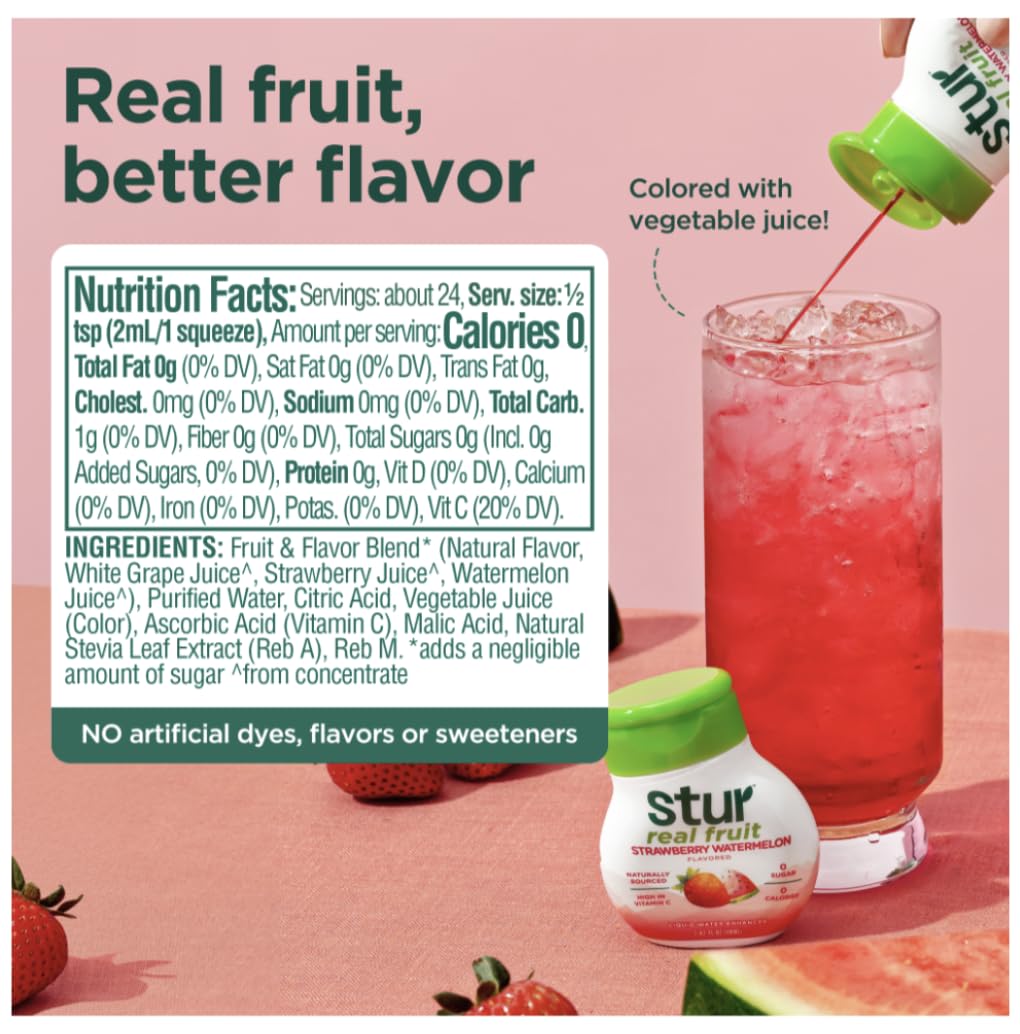
Stur is the category’s longest-running naturally sweetened mainstream brand and the one most consistently stocked at Target, Whole Foods, and regional grocery chains as of mid-2026. Its formulas are stevia-sweetened, free of artificial colors (the brand uses fruit and vegetable juice for color), and positioned firmly in the mid-tier at roughly $5–$7 per bottle.
What the spec sheet shows: A standard 1.62 fl oz Stur bottle lists approximately 20 servings at roughly 8 drops per serving. The label calories are zero. Sodium is listed at 0mg. The sweetener is stevia leaf extract (Reb-A), and natural flavors are listed as the primary flavor carrier.
What reviewers consistently report: Across aggregated reviews on major retail platforms, the pattern is that Stur earns strong scores for flavor variety (the brand runs 15–20 SKUs at any given time) and for its lighter sweetness profile — reviewers who have switched from sucralose-based enhancers frequently call out that Stur tastes “less aggressively sweet.” The most common complaint is the stevia aftertaste at higher concentrations; multiple long-form reviews at Well+Good have flagged this specifically with citrus SKUs at double-dose.
The honest tradeoff: Stur is the right answer if accessibility, variety, and budget-friendliness matter most. It’s not a functional product — no electrolytes, no added vitamins. It is purely a flavoring and sweetening system, and it does that job reliably. For a parent looking for an artificial-dye-free option for a kid’s water bottle, Stur is one of the clearest entry-level recommendations in this tier.
Obrilo
Obrilo entered the market more recently and has built its identity explicitly around the monk fruit + stevia blend approach. The brand is primarily DTC and sells in the $10–$14 range per bottle, positioning itself above Stur but below the functional electrolyte tier.
What the spec sheet shows: Obrilo’s published formulas list monk fruit extract ahead of stevia leaf extract in the sweetener sequence, which typically signals a higher monk fruit concentration. Natural flavors are listed, and the brand explicitly calls out no artificial colors, no artificial flavors, and no sugar alcohols (like erythritol — a compound that some gut-sensitive consumers react to at moderate doses).
What reviewers consistently report: Owners across DTC review panels note that the sweetness is softer and the aftertaste is noticeably cleaner than pure-stevia alternatives. Mindbodygreen’s round-up of the best water enhancers highlights the monk fruit blend approach as a differentiator for stevia-sensitive users. A recurring point from reviewers is that the flavor intensity is lower per drop than Stur — which reviewers either frame as a positive (more control) or a negative (need more drops per bottle, which affects cost-per-use math).
The honest tradeoff: Obrilo costs roughly 2× Stur per bottle and delivers a cleaner sweetness with less aftertaste — that premium is real and most users sensitive to stevia bitterness consider it justified. The brand’s DTC-only model means no impulse purchase at a grocery run; you’re buying on subscription or planned order. If you recommend products to clients in a coaching context, this is the tier-step worth flagging for anyone who has tried stevia-based drops and bounced off the aftertaste.
The Broader Stevia Tier: True Lemon, SweetLeaf Water Drops, Nuun Hydration (Vitamins Line)
A few other brands belong in this comparison to make the picture complete.
True Lemon / True Lime products are crystallized citric acid packets rather than liquid drops — technically a different format — but they compete at the same intent layer (naturally flavored, zero sugar, no artificial sweeteners). They use no stevia at all, relying purely on crystallized citrus oil and citric acid for flavor. For users who want to avoid sweeteners entirely, this is the correct pivot.
SweetLeaf Water Drops are a stevia-forward pure play, similar in positioning to Stur but with a narrower flavor range. The brand’s sweetener system leans on whole-leaf stevia rather than Reb-A isolate, which produces a slightly more herb-forward taste. Reviewers at Healthline’s overview of water enhancers note that SweetLeaf is a reasonable option for users who are already stevia-tolerant and want a clean label at a Stur-comparable price.
Nuun Vitamins uses stevia as its sweetener but layers in a functional payload — B vitamins, vitamin C, and a small electrolyte dose. It sits at $7–$10 for a tube of 12 tablets (dissolvable, not drops), which puts the cost-per-serving math slightly above Stur drops. If you need the functional layer and want to stay in the naturally sweetened column, Nuun Vitamins is the bridge between pure flavor drops and the full electrolyte tier.
By the Numbers: Cost-Per-Serving Snapshot (May 2026)
| Brand | Format | Approx. Servings | Price Range | Cost/Serving |
|---|---|---|---|---|
| Stur | 1.62 fl oz liquid | ~20 | $5–$7 | ~$0.28–$0.35 |
| Obrilo | ~1.7 fl oz liquid | ~20 | $10–$14 | ~$0.50–$0.70 |
| SweetLeaf Water Drops | 1.62 fl oz liquid | ~48 | $6–$9 | ~$0.13–$0.19 |
| Nuun Vitamins | 12-tablet tube | 12 | $7–$10 | ~$0.58–$0.83 |
Serving counts are based on published label data. Actual cost depends on how generously you dose.
SweetLeaf’s cost-per-serving is notably low because the drops are highly concentrated — the 48-serving count is legitimate at the recommended dose. If that math is the primary decision variable, SweetLeaf is the clear winner in the stevia tier. Obrilo’s cost premium over Stur is ~75–100%, which is meaningful over a monthly purchase cadence.
Who Should Actually Buy What: The Decision Framework
Here’s the decision structure we’d apply for any buyer — yourself or a client — currently sitting on a choice:
If your primary driver is price and availability: Stur is the call. It’s reliably stocked in physical retail, the cost-per-serving is reasonable, and the flavor variety is best-in-class for this tier. Accept the stevia aftertaste as a known variable and start with a fruit-forward SKU (berry or strawberry) where it’s least noticeable.
If you or your client is stevia-sensitive or has bounced off stevia-flavored products before: Obrilo is worth the price step-up. The monk fruit–forward formula consistently gets cleaner sweetness marks from reviewers, and the no-erythritol positioning matters for gut-sensitive users. Buy one bottle to confirm tolerance before subscribing.
If cost-per-serving is the optimization target and stevia flavor isn’t a problem: SweetLeaf Water Drops deliver the best math in the tier. The concentration is high, the label is clean, and the brand’s whole-leaf stevia approach suits users who prefer less-processed ingredients — though the taste profile is slightly more herbal than Reb-A isolates.
If you need functional benefits (vitamins, electrolytes) and want to stay in the naturally sweetened column: Nuun Vitamins or a hybrid product like Liquid I.V. Hydration Multiplier Sugar-Free (which uses stevia) is the bridge. Pure flavor drops won’t move the needle on hydration physiology — they are flavoring systems, full stop.
If you’re advising parents on options for active kids: The American Academy of Pediatrics’ 2023 policy statement on low-calorie sweeteners in children recommends caution with all non-nutritive sweeteners, preferring plain water and noting that the long-term pediatric data base is still developing. That context matters. For school-age kids with adequate hydration motivation, Stur’s fruit-and-vegetable-juice coloring and stevia system is lower-risk than synthetic-dye alternatives, but the AAP framing is worth sharing directly with parents rather than glossing over.
The International Food Information Council’s 2025 Food and Health Survey found that 62% of American consumers are actively trying to reduce sugar intake, and that “natural” on a label remains a top purchase driver even when consumers can’t define what it means. That gap — between label appeal and ingredient literacy — is exactly why this tier of products needs a clear-eyed ranking rather than a reflexive “all natural = good” framing. Stur, Obrilo, and their stevia-tier competitors are all legitimate options with real differentiators. The choice comes down to your sensitivity profile, your use case, and how seriously you want to optimize cost-per-serving. Pick one, run it for two weeks, and adjust from there.