If you’ve ever stood in the sports nutrition aisle staring at a wall of colorful packets and wondered whether the $9 tube is basically the same thing as the $22 box — you’re not alone, and the answer is genuinely “it depends.” Electrolytes are simply minerals — mainly sodium, potassium, and magnesium — that your body loses in sweat and needs to reabsorb for your muscles and nervous system to keep working properly. When those levels drop, you feel it: fatigue, cramping, brain fog, or that flat feeling halfway through a long run or a hot workday. The products in today’s comparison — DripDrop, Nuun, and Cure Hydration — all promise to fix that problem, and all live in roughly the same price band. But they are built on meaningfully different formulation philosophies, and picking the wrong one for your context is a real cost, not just a mild inconvenience.
This article breaks down all three with specific numbers, names the tradeoffs plainly, and ends with a decision rule so you leave with a clear answer, not a longer list of questions.
What These Three Products Are Actually Trying to Do
Before we compare sodium milligrams, it helps to understand the design intent behind each brand, because that shapes every formulation decision downstream.
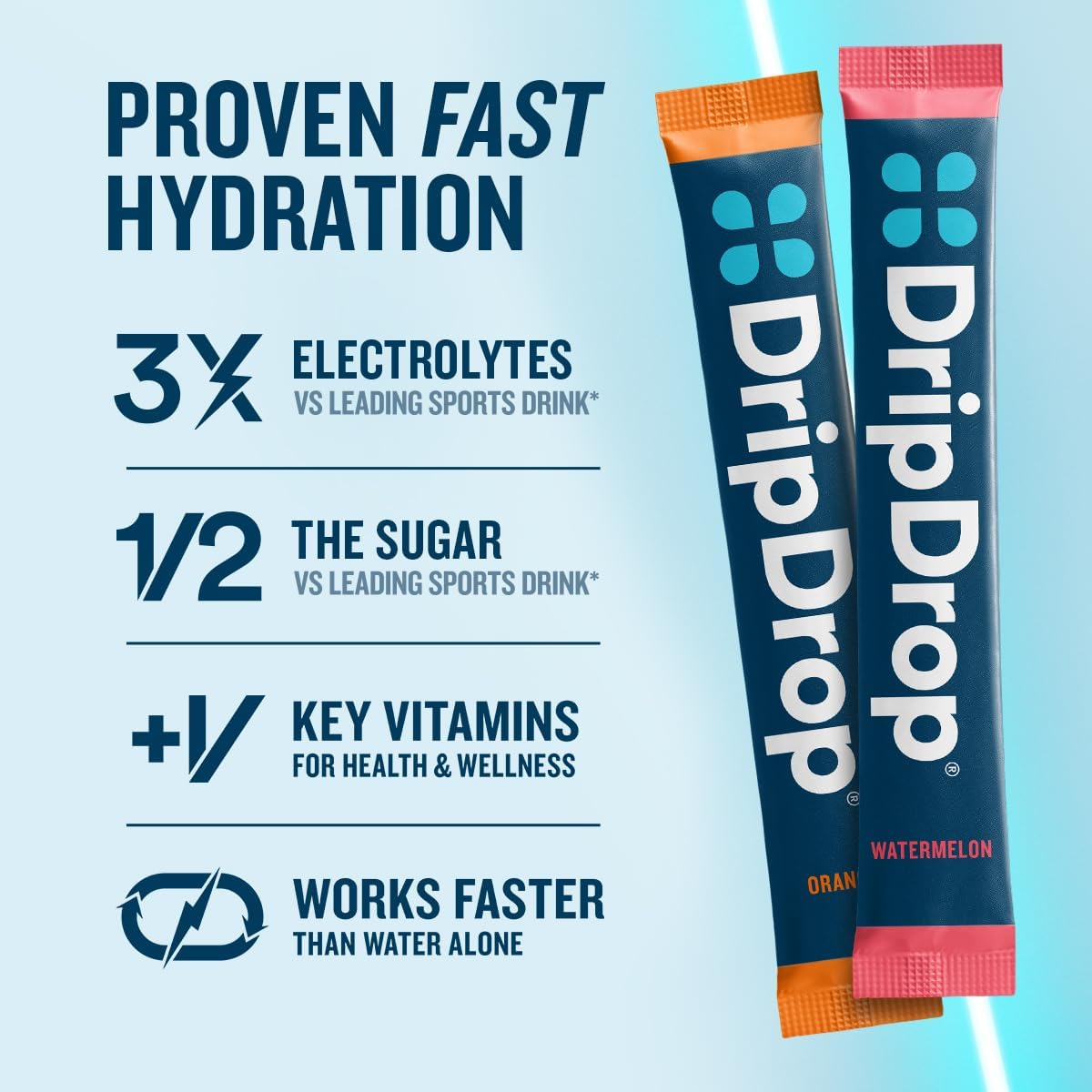
DripDrop ORS (ORS = oral rehydration solution) was developed by a physician who modeled it on World Health Organization oral rehydration therapy standards — the same clinical framework used to treat dehydration from illness or extreme heat exposure. That heritage means DripDrop leads with a high-sodium, glucose-assisted absorption model. The glucose isn’t there to sweeten the product; it’s there because sodium absorption in the gut is significantly more efficient when glucose is present, a mechanism described in detail in the American College of Sports Medicine’s “Exercise and Fluid Replacement” position stand. DripDrop leans harder into medical credibility than lifestyle marketing.
Nuun Sport came out of the endurance sports world and built its identity around a different problem: giving athletes a convenient, low-calorie way to replace electrolytes without the sugar load of traditional sports drinks. The effervescent tablet format is part of the brand DNA — drop it in your bottle, wait 30 seconds, go. Nuun’s flagship Sport tablets are intentionally modest on sodium compared to DripDrop, and they keep total carbohydrate very low. This is a deliberate choice for athletes who are getting their calories from food or gels and don’t want to double-count sugars.
Cure Hydration positions itself in the clean-label, coconut-water-derived electrolyte space. The brand uses organic coconut water powder as its potassium source rather than synthetic potassium chloride, and it markets aggressively around having no artificial sweeteners, no colors, and no “unnecessary” ingredients. Cure targets the wellness consumer as much as the athlete, and its price point and DTC subscription model reflect that.
Understanding those three different philosophies is the frame. Now let’s look at the actual numbers.
The Numbers Side by Side
A single-serving comparison (per packet or per tablet, prepared in approximately 16 oz water as directed):
| DripDrop ORS | Nuun Sport | Cure Hydration | |
|---|---|---|---|
| Sodium | ~330 mg | ~300 mg | ~160 mg |
| Potassium | ~185 mg | ~150 mg | ~310 mg |
| Magnesium | ~35 mg | ~25 mg | ~60 mg |
| Sugar/carbs | ~7–8 g | ~1 g | ~4–5 g |
| Calories | ~30–35 kcal | ~10 kcal | ~20–25 kcal |
| Cost per serving | ~$1.25–$1.50 | ~$0.75–$0.90 | ~$1.50–$1.75 |
Figures based on published manufacturer nutrition facts panels as of Q1 2026. DripDrop ORS original flavor; Nuun Sport lemon lime; Cure Hydration original blend.
A few things jump out immediately. Cure has roughly half the sodium of either competitor but leads on potassium and magnesium — a mineral profile that looks more like a general wellness supplement than a hard-exercise rehydrator. DripDrop wins on sodium density, which matters in specific contexts we’ll get into. Nuun keeps calories nearly negligible, which has real value for athletes in caloric deficit or those training multiple sessions per day.
Per the Examine.com overview on sodium and exercise performance, sodium is the primary electrolyte lost in sweat (typically 500–1,000 mg per liter of sweat depending on the individual), and replenishment matters most in sessions exceeding 60–90 minutes, in heat, or during back-to-back training days. By that benchmark, Cure’s sodium level may be genuinely insufficient for high-output athletes on its own.
Where Each One Actually Wins
DripDrop: The High-Sweat, High-Stakes Choice
DripDrop’s sodium-glucose co-transport model is its differentiating mechanism, and it matters in the right context. Healthline’s overview of electrolytes and fluid balance notes that glucose-facilitated sodium absorption is well-established physiology — it’s why oral rehydration therapy outperforms plain water in clinical dehydration recovery. Outside Online’s coverage of sweat science similarly highlights that high-sodium losses (salty sweaters, hot climates, multi-hour endurance events) are where sodium-forward formulations pay off most.
Where DripDrop is the clearest winner: long outdoor workdays (construction, landscaping, military training), endurance events in heat, illness recovery (where gut function is compromised and efficient absorption matters most), or any situation where someone is meaningfully behind on fluids and needs to catch up fast.
Where it’s overkill: casual daily hydration for someone at a desk, light training, or any context where you’re also eating reasonably well and sweating modestly. The extra sodium and calories don’t hurt anything, but you’re paying a premium for a mechanism you’re not using.
Aggregated reviews across running forums and endurance athlete communities consistently flag DripDrop’s flavor profile as more “medicinal” than competitors — a tradeoff for the higher mineral load. Owners frequently note that the Watermelon and Lemon flavors land better than the original Berry for those sensitive to that quality.
Nuun Sport: The Everyday Training Workhorse
Nuun’s strongest argument is versatility and format convenience at a lower cost per serving than the other two. The tablet is genuinely portable in a way a paper packet is not, and the low-sugar profile means it layers cleanly into any nutrition plan without requiring mental accounting around carbs.
Runners World’s guidance on electrolyte selection for training consistently highlights that most recreational athletes in sessions under 90 minutes don’t need high-sugar hydration products — and Nuun is designed precisely for that space. It’s a reliable, research-informed product that’s been on the market long enough to have meaningful real-world data behind it. Across aggregated reviewer feedback, the pattern shows that athletes who switch from sugary sports drinks to Nuun often report maintaining hydration quality while reducing GI distress — likely a function of the lower osmolarity (the concentration of dissolved particles, which affects how fast your gut absorbs liquid).
One clear limitation: if you are a heavy or salty sweater doing sessions over 90 minutes in heat, Nuun Sport’s ~300 mg sodium is probably not enough to keep pace with losses. Several endurance coaches reviewed by Runners World note that athletes in this category often stack a Nuun tablet with added sodium from food or a separate electrolyte supplement.
Cure Hydration: The Wellness Stack Choice
Cure is the most wellness-positioned of the three, and for the right buyer that’s a genuine advantage. Its organic coconut water base delivers potassium in a form that clean-label buyers trust, and its magnesium level is meaningfully higher than the other two. For someone integrating hydration into a broader wellness protocol — thinking about micronutrient gaps, prioritizing organic and non-GMO certifications, or looking for something to sip throughout the day rather than chug around a workout — Cure fits that use case better than either competitor.
The honest limitation is the sodium number. At ~160 mg per serving, Cure won’t cut it as a standalone intra-workout hydration solution for most moderate-to-high intensity athletes. Where it does work well: morning hydration ritual, post-workout recovery when you’ve also eaten a sodium-containing meal, or as a daily maintenance product for someone who is generally healthy and not sweating heavily.
Its DTC subscription pricing (typically 10–15% off retail as of early 2026) and branding position it well for the repeat-purchase premium buyer, but the math per serving is the highest of the three, which matters if you’re drinking two packets a day.
The Cost Conversation
At current pricing (May 2026), a 30-serving supply of each breaks down roughly as:
- Nuun Sport 4-pack (48 tablets): ~$28–$32 retail, roughly $0.70–$0.85/serving
- DripDrop ORS 16-pack: ~$20–$24, roughly $1.25–$1.50/serving
- Cure Hydration 14-pack: ~$23–$26, roughly $1.65–$1.85/serving
Nuun wins the cost-per-serving comparison clearly. If you’re using a hydration product every single training day — which many practitioners doing 5–6 sessions per week should be — that gap adds up to $15–$25/month. Not trivial.
DripDrop closes the value gap when you consider its use case specificity: if you’re buying it for hard training days only (not every day), the higher cost per packet is spread over fewer uses where it provides the most payoff.
The Decision Rule
Here’s the framework we’d apply:
If you’re training hard in heat, sweating heavily, or recovering from meaningful dehydration: DripDrop is the functional choice. The sodium-glucose mechanism justifies the cost, and the clinical ORS pedigree is real, not marketing.
If you want a reliable everyday training product that doesn’t complicate your caloric math and costs less: Nuun Sport is the obvious choice. It earns its reputation as the endurance community’s default, and the cost makes daily use sustainable.
If you’re building a full-day wellness hydration habit, care deeply about clean-label certifications, and aren’t relying on this product as your primary intra-workout sodium source: Cure is genuinely well-made for that purpose. Pair it with a sodium-containing meal or snack and its mineral profile is well-rounded.
The one trap to avoid: buying Cure as your sole workout hydration solution if you’re doing high-intensity or long-duration training in warm conditions. The sodium profile isn’t built for that, and the American College of Sports Medicine’s exercise hydration guidelines make clear that sodium replacement is the variable that matters most in performance-affecting dehydration scenarios.
None of these products is wrong. They’re each right in a different context — and now you know which context is yours.