If you’ve ever finished a long run or a hard training session and felt weirdly exhausted, crampy, or foggy even after drinking plenty of water, you’ve probably bumped into an electrolyte problem. Electrolytes are minerals — mainly sodium, potassium, and magnesium — that your body loses in sweat and needs to keep muscles contracting and nerves firing. For casual exercisers, plain water and a balanced diet often replace those losses just fine. But for heavy sweaters — people who soak through a shirt in 30 minutes, who train twice a day, or who race in heat — the math changes fast. A high-sodium electrolyte drink mix is specifically formulated to replace the larger salt losses those athletes experience. This guide breaks down what separates a serious high-sodium product from a standard sports drink, compares the two biggest names at that tier — LMNT and REDMOND Re-Lyte — and gives you a clear decision frame for choosing between them (or combining both).
Why Sodium Matters More Than You Think
Most mainstream sports drinks were designed around a simple formula: enough sodium to drive thirst and encourage drinking, at a concentration low enough to appeal to the mass market. The American College of Sports Medicine’s “Exercise and Fluid Replacement” Position Stand notes that sweat sodium concentration varies enormously between individuals — anywhere from roughly 200 mg per liter to over 1,700 mg per liter — meaning a one-size product will underserve a significant portion of athletes.
Heavy sweaters — a term that includes both people with genetically saltier sweat and anyone training hard in heat for more than 60–90 minutes — fall at the high end of that range. For them, the standard 110 mg of sodium in a 20-oz sports drink isn’t replacing what they’re losing; it’s a symbolic gesture. Cramping, bonking (sudden energy depletion), and post-workout headaches are common downstream symptoms, per Healthline’s overview of electrolyte imbalance.
Examine.com’s sodium compound overview makes an additional point worth internalizing: sodium doesn’t just prevent cramps. It governs fluid distribution between cells and the bloodstream (called osmolality), which directly affects how much water your body actually absorbs and retains rather than excretes. A drink with too little sodium relative to water can paradoxically accelerate fluid loss — a condition called hyponatremia (low blood sodium) in its severe form, or simply poor hydration efficiency in its milder, more common form.
The high-sodium electrolyte category — products containing 500 mg of sodium or more per serving — is built to close that gap. These are not casual hydration products. They’re precision tools.
How LMNT and REDMOND Re-Lyte Are Built: A Spec Comparison
Both LMNT (pronounced “element”) and REDMOND Re-Lyte are positioned at the serious-athlete tier, both carry zero sugar in their base formulas, and both command a price premium over mainstream options. The meaningful differences are in mineral ratios, ingredient sourcing philosophy, form factor, and cost structure.
By the Numbers: Electrolyte Profile Per Serving
| Product | Sodium | Potassium | Magnesium | Sugar | Price/Serving |
|---|---|---|---|---|---|
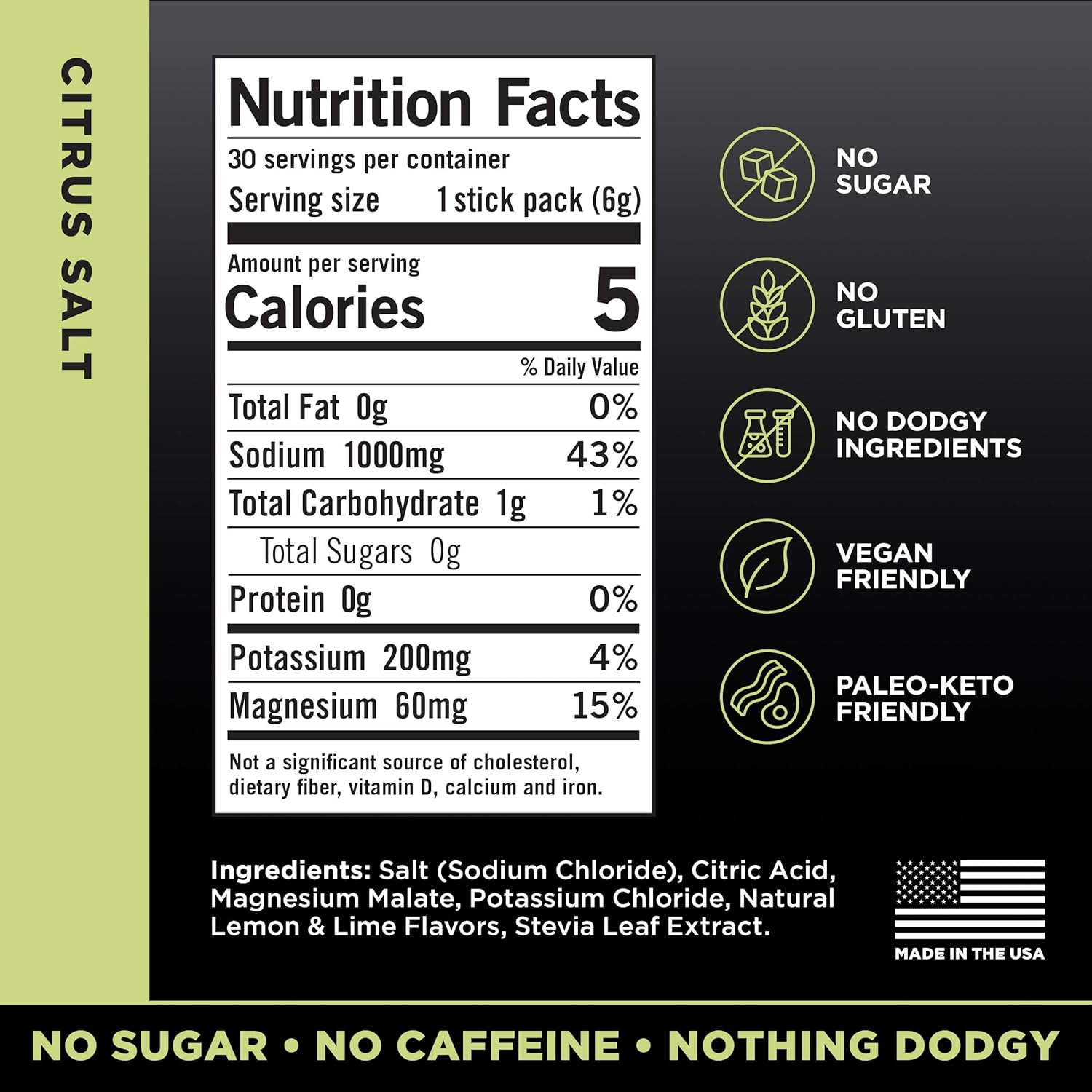
| LMNT Raw Unflavored | 1,000 mg | 200 mg | 60 mg | 0 g | ~$1.50 |
| LMNT Flavored (e.g., Raspberry Salt) | 1,000 mg | 200 mg | 60 mg | 0 g | ~$1.50 |
| REDMOND Re-Lyte Hydration | 810 mg | 400 mg | 72 mg | 0 g | ~$1.30–$1.45 |
Pricing reflects DTC subscription rates as of May 2026. Single-unit pricing is higher for both brands.
The numbers tell a clean story. LMNT is higher-sodium, lower-potassium. REDMOND Re-Lyte is moderate-sodium by comparison, meaningfully higher in potassium, and slightly higher in magnesium. Neither is “better” in the abstract — they serve different physiological profiles.
LMNT: Built for the Salt-Loss Extremist
LMNT’s founding rationale, which co-founder Robb Wolf has discussed extensively in public interviews and the brand’s own content, is that conventional sports nutrition dramatically undershoots sodium for serious athletes. The 1,000 mg per packet figure is deliberate and unapologetic. Outside Online’s feature “The Case for Salt” traced this philosophy through the broader low-carbohydrate and endurance community, where sodium supplementation became central to managing performance on reduced-carbohydrate diets.
In practice, owners and athletes in long-run reviews consistently report LMNT working well for:
- Multi-hour endurance sessions (marathons, century rides, long trail runs in heat)
- Low-carbohydrate or ketogenic athletes, who excrete more sodium due to lower insulin levels
- High-sweat-rate individuals who notice visible salt crust on skin or clothing after workouts
- Fasted training, where sodium intake before or during exercise helps sustain output
The unflavored “Raw” SKU deserves a specific mention: it’s the only major high-sodium electrolyte product at this tier that produces no flavor interference, making it useful for people who want to add sodium to another beverage without changing the taste profile.
The tradeoff worth naming: at 1,000 mg sodium per serving, LMNT can be too aggressive for shorter workouts, lower-sweat individuals, or anyone with blood pressure concerns. Runners World’s electrolyte explainer notes that sodium needs scale with both duration and ambient temperature — what’s right for a two-hour summer long run may be overkill for a 45-minute gym session. LMNT isn’t wrong for those situations; it’s simply over-engineered for them, and the cost-per-session math suffers if you’re only using half a packet to dial back intensity.
REDMOND Re-Lyte: A More Balanced Mineral Ratio
REDMOND is a Utah-based company that made its name in natural mineral salts — their Real Salt brand uses unrefined sea salt from an ancient inland deposit. Re-Lyte carries that sourcing ethos forward: the sodium in Re-Lyte comes from Redmond’s own Real Salt, not synthetic sodium chloride.
The 810 mg sodium / 400 mg potassium ratio in Re-Lyte is notably closer to the electrolyte composition of sweat itself. The American College of Sports Medicine’s position stand puts sweat potassium at roughly 150–500 mg per liter, which means Re-Lyte’s potassium contribution is more than symbolic — it’s repletion-level, not token. For athletes who do prolonged output across multiple days (stage races, back-to-back long training blocks, multi-day hiking), potassium replenishment becomes increasingly important as muscle glycogen depletes and cellular electrolyte balance shifts.
Across aggregated reviews, the pattern for Re-Lyte users skews toward:
- Strength athletes and CrossFit athletes who train hard but not for 3+ hours continuously
- Recovery-focused users who prioritize the full mineral profile over maximum sodium
- Whole-food / real-food aligned buyers who respond to the sourcing narrative around Real Salt
- Budget-aware serious athletes, since Re-Lyte typically runs $0.05–$0.20 less per serving on subscription
The tradeoff here: Re-Lyte’s sodium ceiling is lower. If you are a genuine salt-loss outlier — someone whose sweat stings eyes intensely, who leaves white crystalline residue on dark clothing even after moderate efforts — Re-Lyte may leave you short in prolonged heat exposure. You’d need to add a separate sodium source, which partially defeats the convenience proposition.
The Sourcing and Formulation Angle
This matters more to some buyers than others, but it’s worth naming because it affects both trust and regulatory outlook.
LMNT uses pharmaceutical-grade sodium chloride, potassium chloride, and magnesium malate. The formulation is built for consistency and precision: you know exactly what dose you’re getting every time, which is valuable when you’re treating electrolyte intake as seriously as you’d treat a training variable. The clean-label positioning is genuine — no artificial dyes, no added sugar, no fillers. This aligns with the post-California-dye-ban market shift happening across the category in 2025–2026, where major brands are reformulating to exit Red 40 and Yellow 5 from their lines; LMNT never had them to remove.
REDMOND Re-Lyte’s sourcing differentiation is its most distinctive quality claim. The company publishes third-party testing results for their Real Salt raw material. For buyers who’ve moved toward whole-food mineral sources — trace mineral drops, Celtic sea salt, unrefined mineral concentrates — the sourcing narrative feels coherent rather than marketing-layered. The mineral profile of unrefined salt includes trace elements beyond the three primary electrolytes, though the functional impact of those trace amounts in a single serving is modest.
Neither product has faced material quality or contamination controversies as of mid-2026, and both are manufactured in NSF-registered or SQF-certified facilities per their publicly available documentation.
Decision Framework: If X, Then Y
Here’s the plain-language decision tree based on the data above:
If you sweat heavily for more than 90 minutes, train in sustained heat, or follow a low-carbohydrate diet: LMNT is the cleaner fit. The 1,000 mg sodium target matches the upper range of sweat-loss scenarios that the ACSM position stand identifies as under-served by standard products. The precision dosing lets you treat it like a supplement variable.
If you train hard but in mixed modalities — strength, intervals, moderate-length endurance — and care about full-spectrum mineral replenishment: Re-Lyte’s higher potassium and real-salt sourcing give you a more complete replenishment profile per serving, at a slightly lower per-packet cost. Better for daily use across varied training types.
If you’re buying for a client or recommending to athletes with blood pressure concerns: Neither product is designed for hypertension management, and both carry sodium loads that warrant a conversation with a physician. Re-Lyte’s 810 mg is marginally more conservative if a lower-sodium option is needed at this performance tier.
If you want to dose more precisely for different session types: LMNT’s Raw Unflavored gives you the most flexibility — add half a packet to a recovery drink, a full packet to a long-run bottle, without flavor interference or flavor fatigue across a week of training.
If sourcing and ingredient provenance are a first-order concern: Re-Lyte wins on the narrative, and the third-party testing documentation supports it. This is the pick for the whole-food-aligned premium wellness buyer who’s already reading ingredient panels on their mineral drops and adaptogens.
If cost is the deciding margin at the same quality tier: Both products are close, but Re-Lyte’s subscription pricing typically edges out at $0.10–$0.20 less per serving. Over a month of daily use (30 servings), that’s $3–$6 — real money across a year.
One More Variable: When to Stack Rather Than Choose
For athletes logging serious training volume — think marathon blocks, Ironman build phases, or heavy summer training camps — the answer is sometimes both products in different roles. LMNT Raw during long sessions where sodium priority is highest; Re-Lyte as the daily baseline for shorter sessions where the fuller mineral profile earns its place. That’s not a buy-more hedge; it’s recognizing that the physiological demands of a two-hour tempo run in July and a 45-minute strength session in October are genuinely different problems.
Both products are available in single-serve trial packs, which is worth noting for new buyers or coaches recommending these to clients: the barrier to testing the protocol is low before committing to bulk quantities.
The serious-athlete hydration tier isn’t complicated once you know the variable that matters most — sweat rate and session duration drive the decision more than brand loyalty. Let those guide you, and the right product tends to become obvious.