
If you’ve ever stood in a supplement aisle — or scrolled through an online cart — wondering whether the $25 tube of LMNT is actually worth it over a $20 multipack of Liquid I.V., you’re in the right place. Both products are electrolyte drink mixes, meaning you pour a packet into water to replace the minerals your body loses through sweat: mainly sodium, potassium, and magnesium. Those three minerals — collectively called electrolytes — govern how well your muscles contract, how clearly your brain fires, and how efficiently your cells absorb the water you’re already drinking. Get the balance wrong and you feel flat, crampy, or foggy even when you’re technically “drinking enough.” Get it right and hydration actually works. This article breaks down exactly how Liquid I.V. and LMNT differ on every variable that matters — ingredients, sodium load, sugar content, cost per packet, and the use cases where each one genuinely wins — so you can make a confident call rather than a guess.
The Label-By-Label Breakdown: What’s Actually Inside Each Packet
This is where most comparisons stay vague. We’re not going to do that.
Liquid I.V. Hydration Multiplier (original formula, Q1 2026 label) delivers per packet:
- Sodium: 500 mg
- Potassium: 380 mg
- Vitamin C: 100% DV
- B vitamins: B3, B5, B6, B12 at 100% DV each
- Sugar: 11 g (from pure cane sugar)
- Calories: 45
- Sweetener: cane sugar plus stevia blend
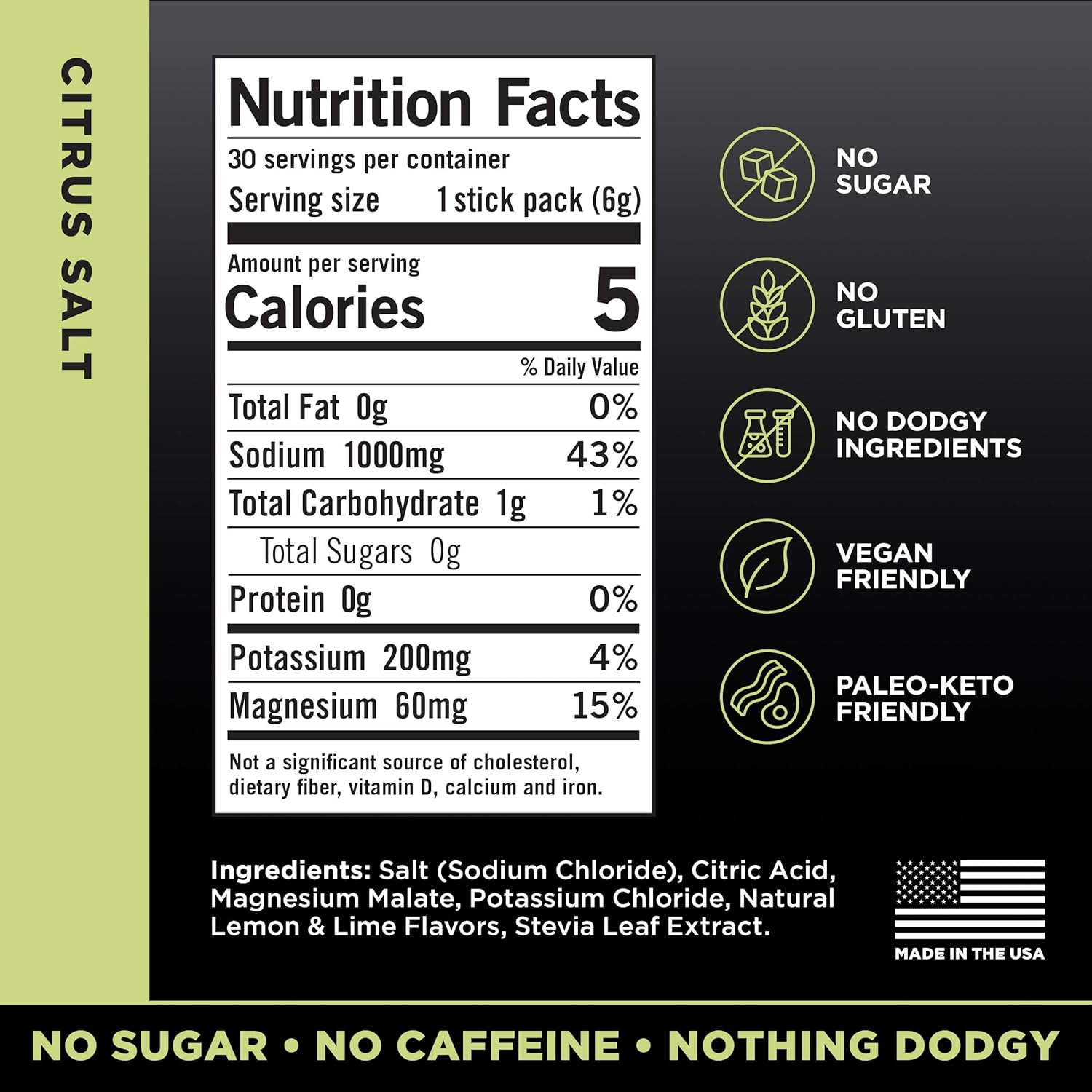
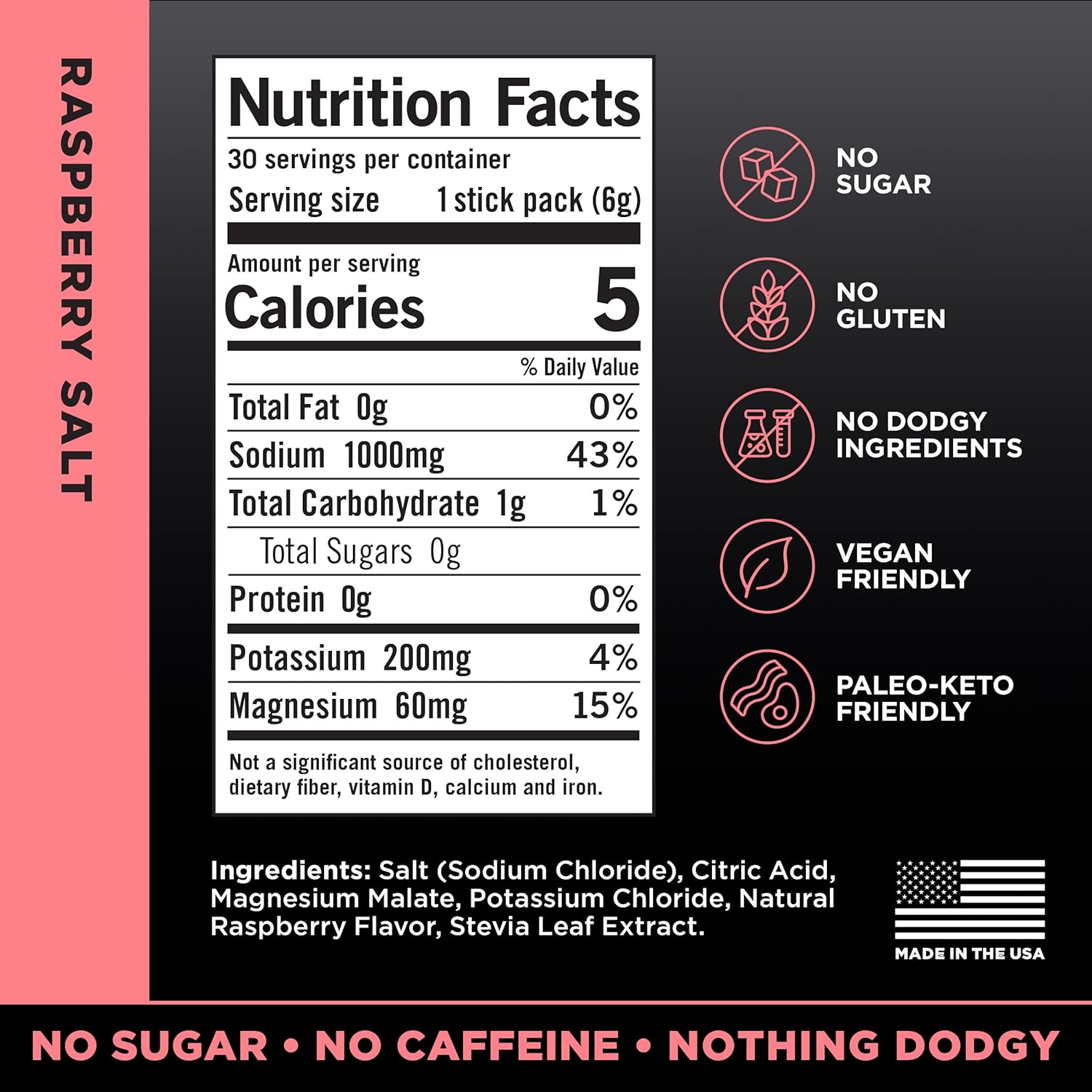
LMNT Flavored and Raw Unflavored Packets deliver per packet:
- Sodium: 1,000 mg
- Potassium: 200 mg
- Magnesium: 60 mg
- Sugar: 0 g
- Calories: 0–10 (flavored varieties use natural flavor and stevia)
- Sweetener: stevia only in flavored versions; none in Raw Unflavored
Side-by-Side Metrics
| Metric | Liquid I.V. | LMNT | Tier |
|---|---|---|---|
| Sodium per packet | 500 mg | 1,000 mg | LMNT — $44.97 |
| Potassium per packet | 380 mg | 200 mg | LMNT — $44.97 |
| Magnesium | 0 mg | 60 mg | LMNT — $45.00 |
| Sugar | 11 g | 0 g | LMNT — $44.97 |
| Calories | 45 | 0–10 | LMNT — $44.97 |
| Cost per packet (retail, May 2026) | ~$1.50–$1.75 | ~$1.50–$1.75 | LMNT — $44.97 |
| Vitamins included | Yes (B-complex, C) | No | LMNT — $44.97 |
The cost-per-packet math is nearly identical when you buy standard 30-count formats — both land around $1.50 to $1.75 depending on flavor and retail channel. The substantive differences are entirely about what you’re paying for inside the packet.
The Sodium Question: Why 500 mg vs. 1,000 mg Is a Real Decision, Not a Preference
Sodium is the electrolyte that drives fluid absorption in your small intestine, and it’s the one most electrolyte products get wrong — either by including too little to matter, or by front-loading so much that sensitive individuals feel the cardiovascular strain.
Low-to-Moderate Sodium: The Liquid I.V. Approach
The American College of Sports Medicine’s position stand on Exercise and Fluid Replacement (referenced in plain text; full document available through ACSM’s journal archives) identifies sweat sodium concentration as highly individual, ranging from roughly 230 mg to 1,150 mg per liter of sweat. That’s a five-fold range between individuals — which is why the sodium debate between these two products is a genuine physiological fork in the road, not marketing theater.
Liquid I.V.’s 500 mg per packet sits at the lower end of that spectrum and aligns with the American Heart Association’s published guidance on daily sodium intake (referenced in plain text as “How Much Sodium Should I Eat Per Day?” from AHA’s nutrition resources), which places the recommended ceiling for most adults at 2,300 mg per day. For a casual hydration scenario — recovering from a warm commute, staying ahead of fluids during a moderate workout, or offering a child a more hydrating alternative to plain water — 500 mg is a sensible, broadly tolerable dose. It is not inadequate. It is calibrated for a different population than LMNT targets.
The tradeoff to name explicitly: if you’re hypertensive or sodium-sensitive, Liquid I.V.’s lower load is a meaningful advantage. Healthline’s editorial overview titled “Electrolytes: Definition, Functions, Imbalance, and Sources” (referenced in plain text) flags that high-sodium supplementation warrants a conversation with a clinician for anyone managing blood pressure. Liquid I.V. carries no such caveat for the general, normotensive population.
LMNT
$44.97
In stock on Amazon
Check price on AmazonHigh-Sodium Precision: The LMNT Approach
LMNT’s 1,000 mg per packet was formulated specifically for people who sweat heavily — endurance athletes, individuals in hot climates, and low-carbohydrate dieters whose kidneys excrete more sodium than average due to reduced insulin-driven reabsorption. Reviewers and testers at Outside Online and Runners World (both referenced in plain text) consistently identify LMNT as the pick for long runs and multi-hour training efforts where sodium depletion causes cramping and performance decline even when fluid intake looks adequate on paper.
The edge case worth naming: if you consume two packets in a single training day, LMNT alone contributes 2,000 mg of sodium to your intake. Factor that against your full dietary sodium before defaulting to double-dosing, particularly if you’re monitoring cardiovascular risk markers.
LMNT
$45.00
In stock on Amazon
Check price on AmazonSodium Summary for the Decision-Maker
Neither formula is wrong. Liquid I.V.’s 500 mg is right for general wellness and moderate activity. LMNT’s 1,000 mg is right for performance contexts where heavy sweat loss is the norm. Knowing which category your training falls into is the entire decision.
Sugar, Sweeteners, and the Clean-Label Calculus
Liquid I.V. and the Glucose Co-Transport Mechanism
Liquid I.V. includes 11 grams of cane sugar per packet. That’s not arbitrary. The product was built around a glucose-and-sodium co-transport mechanism: glucose and sodium enter intestinal cells together via the SGLT1 transporter, pulling water along with them. This is the same physiological basis behind World Health Organization oral rehydration salts. Examine.com’s research summaries on sodium and carbohydrate co-transport (referenced in plain text) confirm that the combination enhances absorption speed relative to sodium alone, particularly in dehydrated states. The glucose isn’t filler — it’s functional.
The honest counterpoint: if you’re tracking carbohydrates, managing blood sugar, or following a ketogenic eating pattern, 11 grams of sugar per serving is a meaningful number. Two packets a day equals 22 grams — significant against most carb budgets and a real caloric load across weeks of daily use.
LMNT
$44.97
In stock on Amazon
Check price on AmazonLMNT and the Zero-Sugar Stevia Formula
LMNT’s zero-sugar formula uses stevia, a non-caloric sweetener derived from a plant compound. Palatability is individual — some users consistently describe a bitter or medicinal aftertaste from stevia, while others find it neutral or mildly sweet. Among flavored LMNT options, the Citrus Salt and Raspberry Salt varieties are most commonly reported as masking the stevia note effectively. The Raw Unflavored packet eliminates the question entirely by skipping sweetener altogether.
As of May 2026, neither Liquid I.V. nor LMNT contains Red 40, Yellow 5, or other synthetic dyes flagged under recent food-additive scrutiny. Both brands have moved to natural coloring or fully dye-free formulas. Liquid I.V.’s 2025 reformulation removed Blue 1 from multiple SKUs, and the current Hydration Multiplier line is dye-free across its standard portfolio.
LMNT
$45.00
In stock on Amazon
Check price on AmazonPotassium, Magnesium, and the Minerals Most Buyers Miss
Potassium: Where Liquid I.V. Leads
Most consumers fixate on sodium and overlook the supporting minerals. Potassium is where Liquid I.V. actually leads: 380 mg per packet versus LMNT’s 200 mg. Potassium works in concert with sodium to regulate fluid balance at the cellular level and is critical for preventing muscle cramps in endurance activity — particularly the calf and quad cramps that tend to appear late in long efforts. For athletes training multiple sessions per day or sweating at high volume across the week, LMNT’s lower potassium relative to its sodium may leave this channel underserved without separate dietary compensation.
Magnesium: Where LMNT Leads
Magnesium is LMNT’s unique contribution to this comparison. Liquid I.V. contains none. LMNT delivers 60 mg per packet, roughly 14 percent of the adult recommended daily intake. Magnesium participates in over 300 enzymatic reactions, including muscle relaxation and adenosine triphosphate (ATP) synthesis — the cellular energy currency your muscles depend on during sustained effort. The American College of Sports Medicine’s exercise nutrition guidance (referenced in plain text) notes that magnesium insufficiency is measurably more common in endurance athletes than in sedentary populations, owing to sweat losses and elevated metabolic demand. For a performance-focused buyer treating their electrolyte stack as deliberately as macros, this 60 mg has real functional value and is not replicated in Liquid I.V.
B Vitamins: Liquid I.V.’s Convenience Bonus
The B-vitamin blend in Liquid I.V. — B3, B5, B6, and B12 — is a differentiator in the opposite direction. These vitamins support energy metabolism at the cellular level. The doses reach 100 percent of daily values, and for someone who doesn’t take a separate B-complex supplement, that represents a genuine convenience benefit. For someone already using a comprehensive multivitamin, the overlap is nutritive redundancy rather than incremental gain.
LMNT
$44.97
In stock on Amazon
Check price on AmazonThe Decision Framework: If X, Then Y
Here is the plain-language summary of what the label analysis actually tells us about who should buy which product.
Choose Liquid I.V. if:
- Your workouts are moderate in duration (under 90 minutes) and intensity
- You want something accessible, palatable, and broadly family-friendly — the sweeter profile tends to drive better compliance, especially for children and flavor-seekers
- You are not tracking carbohydrates or managing blood sugar
- You want the B-vitamin bonus without a separate supplement
- You are sodium-sensitive or managing blood pressure and prefer the lower-dose option
- Your primary goal is daily general hydration rather than sports-specific electrolyte repletion
Choose LMNT if:
- You train at high intensity or long duration — runs over 90 minutes, cycling, CrossFit, triathlon blocks
- You follow a low-carbohydrate or ketogenic eating pattern and need zero-sugar electrolyte support
- You are a heavy sweater — salt stains on workout gear, frequent cramping, pronounced thirst despite adequate drinking
- You want magnesium included without adding a separate supplement
- You have already confirmed stevia tolerance based on past supplement experience
- Your primary goal is sodium repletion at a clinically meaningful dose for athletic performance
Our Take
Both products are legitimate, well-formulated, and meaningfully different from each other — which is the honest outcome of actually reading the labels rather than assuming one is simply “better.” Liquid I.V. is the more forgiving, broadly accessible formula: lower sodium, built-in glucose for absorption efficiency, and a B-vitamin stack that earns its shelf space for users who aren’t already supplementing. LMNT is the precision tool: higher sodium, zero sugar, magnesium included, and calibrated specifically for the performance context it was designed for.
The cost-per-packet parity means this decision is not financial. It is physiological. Know your sweat rate, your carbohydrate tolerance, and your training load — and the right answer practically picks itself.
[PRODUCT: Liquid I.V. Hydration Multiplier 30-count] [TIER: mid]
LMNT
$44.97
In stock on Amazon
Check price on Amazon[PRODUCT: LMNT Variety Pack 30-count] [TIER: performance]
LMNT
$45.00
In stock on Amazon
Check price on Amazon