When you’re sick — vomiting, running a fever, or fighting a stomach bug — your body loses far more than water. It sheds electrolytes (minerals like sodium, potassium, and chloride that regulate fluid balance and nerve function), and plain water alone can’t replace them fast enough to help you recover. That’s where oral rehydration solutions, or ORS, come in. An ORS is a precisely formulated mix of water, glucose, and electrolytes designed to exploit a physiological shortcut: the small intestine absorbs sodium much faster when glucose is present. The three products we’re comparing — Pedialyte, Liquid I.V., and DripDrop ORS — all claim this mechanism. But they’re formulated differently, priced differently, and suited to different situations. This guide breaks down the actual science, the real tradeoffs, and a clear decision rule so you can grab the right product before the fever spikes.
| EDITOR'S PICK[Pedialyte AdvancedCare Plus Ele…](https://www.amazon.com/dp/B07BQV3WR9?tag=greenflower20-20) | Mid-tier[Pedialyte Electrolyte Powder Pa…](https://www.amazon.com/dp/B01JO4KWAU?tag=greenflower20-20) | Budget pick[Liquid I.V.® Hydration Multipli…](https://www.amazon.com/dp/B01IT9NLHW?tag=greenflower20-20) | |
|---|---|---|---|
| Electrolytes | 33% more | — | — |
| Packets Count | 18 | 24 | 16 |
| Prebiotics | ✓ | — | — |
| Flavor | Berry Frost | Variety | Lemon Lime |
| Price | $35.61 | $26.97 | $23.46 |
| See on Amazon → | See on Amazon → | See on Amazon → |
The Science Behind ORS: Why Formula Ratios Actually Matter
The foundational work here is well established. The World Health Organization’s publication Oral Rehydration Salts: Production of the New ORS — one of the most cited public health documents in modern medicine — established the benchmark formula: roughly 245 mOsm/L osmolarity (a measure of how concentrated the solution is), with a specific sodium-to-glucose ratio that maximizes intestinal uptake. The principle, called cotransport or the sodium-glucose linked transporter (SGLT1) mechanism, is straightforward: for every molecule of glucose that enters the intestinal cell, one sodium ion comes along for the ride, and water follows both.
What this means practically: a solution that’s too sweet (high glucose, low sodium) can actually worsen diarrhea by drawing water into the gut rather than out of it. A solution too heavy in sodium without enough glucose won’t absorb efficiently. The ratio has to land in a specific window.
The American Academy of Pediatrics’ clinical report Managing Acute Gastroenteritis Among Children — the most widely cited pediatric reference on this topic — specifies that solutions with 45–90 mEq/L of sodium are appropriate for rehydration, with a glucose concentration that keeps osmolarity below 270 mOsm/L for clinical illness. Healthline’s overview of oral rehydration therapy (healthline.com) echoes these parameters, noting that solutions outside this osmolarity window are less effective at reversing dehydration from GI illness. This is the yardstick we use to evaluate all three products below.
By the Numbers: ORS Formula Comparison
| Product | Sodium (per 8 oz) | Sugar (per 8 oz) | Osmolarity (est.) | Price per serving |
|---|---|---|---|---|
| Pedialyte Classic | ~370 mg (~16 mEq) | 6 g | ~250 mOsm/L | ~$0.75–$1.00 |
| DripDrop ORS | ~330 mg (~14 mEq) | 7 g | ~235 mOsm/L | ~$1.50–$2.00 |
| Liquid I.V. Hydration Multiplier | ~500 mg (~22 mEq) | 11 g | ~330–350 mOsm/L (est.) | ~$1.50–$2.00 |
Sources: published nutrition labels and manufacturer spec sheets as of Q1 2026. Osmolarity for Liquid I.V. is estimated from label data; the company does not publish a formal osmolarity figure in its current consumer marketing materials.
Product-by-Product Breakdown
Pedialyte Classic: The Clinical Baseline
Pedialyte has been the pharmacy-shelf standard since the 1960s, and it earned that position by being built directly to ORS guidelines. The classic unflavored formula sits close to the WHO’s low-osmolarity recommendation, with a sodium level that the AAP’s gastroenteritis guidelines classify as appropriate for mild-to-moderate dehydration from illness.
A few things stand out in the spec-sheet analysis:
- Sodium-to-glucose ratio is conservative and clinically calibrated. At roughly 6 g of sugar per 8 oz, it’s not sweet enough to be pleasant for most adults — which is partly why the brand launched Pedialyte Sport and Pedialyte Sparkling Rush — but it’s formulated for function, not palatability.
- Potassium sits around 180 mg per 8 oz, supporting replacement of what’s lost through vomiting and diarrhea.
- Powder packets (Pedialyte Powder Packs) offer a shelf-stable, travel-friendly format at lower cost-per-serving than the ready-to-drink bottles, which matters if you’re stocking a sick-day kit.
Healthline’s oral rehydration therapy overview (healthline.com) specifically names Pedialyte as a product that meets clinical ORS criteria, noting its established use in both pediatric and adult illness settings. The AAP’s clinical report on acute gastroenteritis cites this product category as a preferred option for children — a recommendation that has remained consistent across multiple guideline revisions.
The tradeoff: Pedialyte’s taste profile is medicinal for a reason — the formula prioritizes absorption over palatability. Adults who won’t drink it consistently because it tastes like a saline science experiment are under-rehydrating, which defeats the purpose. This is the scenario where a more palatable option like DripDrop becomes genuinely useful.
Best for: Children of any age, anyone following medical provider guidance on ORS, people who want the closest consumer analog to the clinical standard, parents stocking a medicine cabinet.
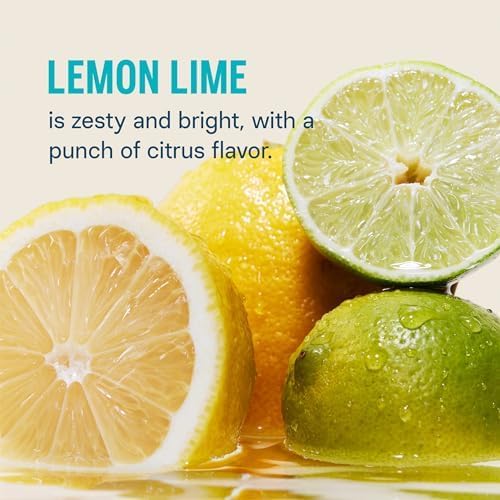
Liquid
$23.46
In stock on Amazon
Check price on AmazonDripDrop ORS: Clinical Rigor, Consumer Taste
DripDrop was developed by a physician who worked in cholera-outbreak settings and wanted something that met WHO ORS standards while being palatable enough that patients — and civilian adults — would actually drink it. That origin story is relevant because it explains how DripDrop positions itself: not as a wellness product, not as a sports drink, but as a medical-grade ORS that competes on both formula and flavor.
Looking at the label math:
- Sodium is slightly lower than Pedialyte Classic (~330 mg per 8 oz vs. ~370 mg), but still within the AAP’s recommended range for illness rehydration.
- Osmolarity is estimated to sit near or just below the WHO’s 245 mOsm/L target — making it one of the most formula-accurate consumer products on the market.
- Added ingredients include zinc (which the WHO recommends in its pediatric diarrhea treatment guidance) and small amounts of vitamin C and magnesium — additions that don’t compromise efficacy and address micronutrient losses that accompany illness.
Examine.com’s coverage of electrolytes and fluid absorption (examine.com) notes that hypotonic (lower osmolarity) solutions can improve absorption rates in clinical dehydration scenarios. DripDrop’s formula reflects that research direction, sitting below or at the WHO target rather than above it.
The flavor engineering matters here. DripDrop’s Watermelon, Lemon, and Berry varieties are genuinely palatable — consumer reviews across aggregated retail channels consistently highlight taste as the differentiating factor. For anyone — child or adult — who refuses Pedialyte’s flavor, DripDrop closes the compliance gap without meaningful formula sacrifice.
The tradeoff: Price. At roughly $1.50–$2.00 per packet, DripDrop costs more per serving than Pedialyte Classic. For a two-day stomach flu requiring 6–8 servings per day, that adds up. A DripDrop subscription brings the cost per serving down somewhat, but it is not a budget product.
Best for: Adults who won’t comply with Pedialyte’s taste, clinical-accuracy seekers who also care about flavor, practitioners recommending products to clients who have compliance barriers, households that want one product for illness and mild activity recovery.
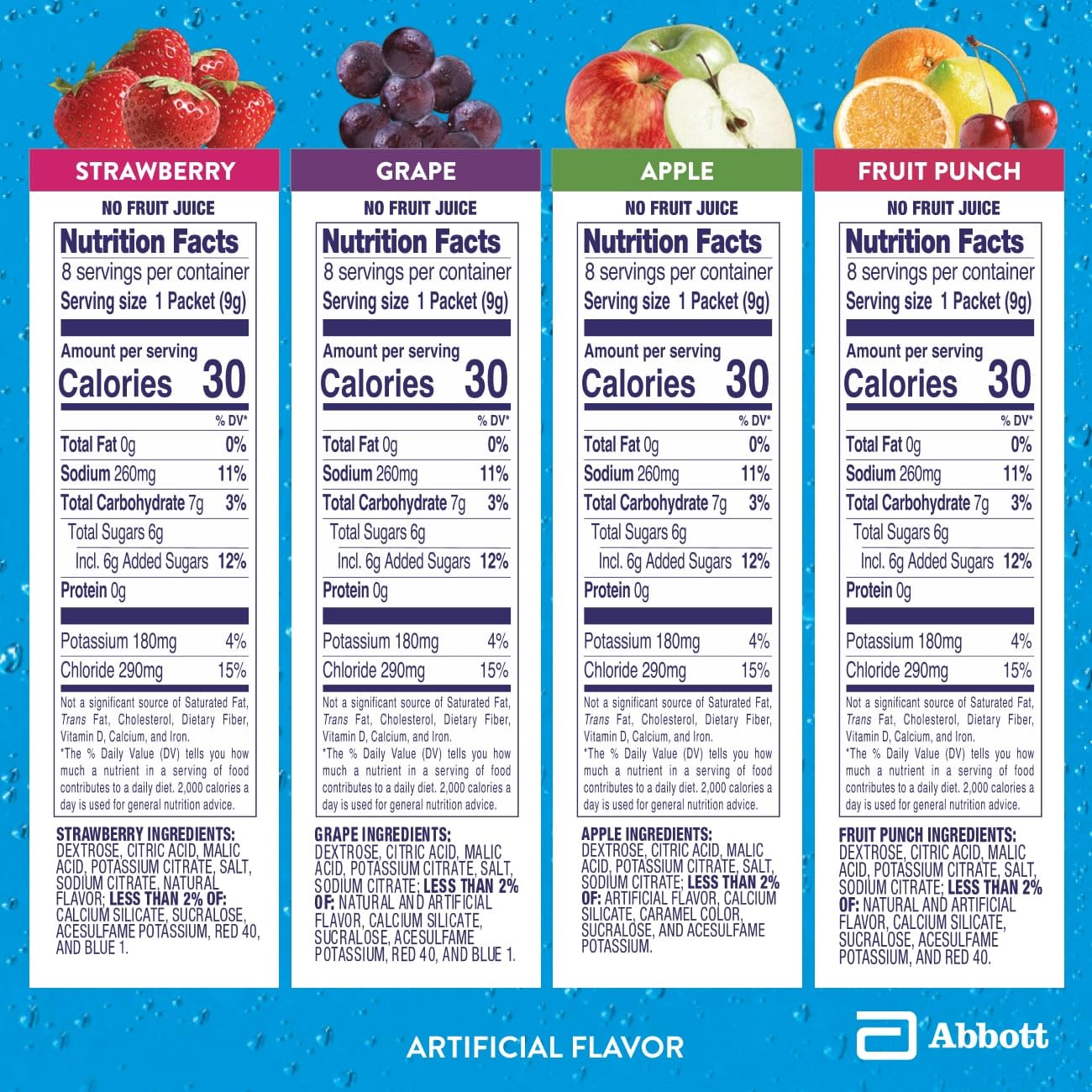
Pedialyte
$26.97
In stock on Amazon
Check price on AmazonLiquid I.V.: Sports Hydration Adjacent, Not ORS Native
Liquid I.V. is the most commercially dominant product in this comparison — available at Costco, Target, and across travel retail nationwide. It markets itself using “Cellular Transport Technology,” which is a branded framing of the same SGLT1 cotransport mechanism described above. That part is legitimate science. The issue is where the formula lands relative to clinical ORS standards.
Key differences:
- Sodium is higher (~500 mg per 8 oz, ~22 mEq/L) than Pedialyte or DripDrop, which can be beneficial for sweat-loss scenarios — endurance exercise, heat exposure — but sits at or above the upper end of what the AAP recommends for illness-related rehydration, particularly in children.
- Sugar content is higher (~11 g per 8 oz), which pushes estimated osmolarity to somewhere in the 330–350 mOsm/L range — above the WHO’s low-osmolarity ORS target. At this level, the solution is no longer hypotonic; it’s closer to a conventional sports drink in osmolarity terms.
- Higher-osmolarity fluids can worsen GI symptoms in illness settings. The WHO’s Oral Rehydration Salts: Production of the New ORS document specifically records that older, higher-osmolarity formulas were revised downward precisely because of this problem. Liquid I.V.’s estimated osmolarity sits above even the original pre-revision WHO threshold.
The American College of Sports Medicine’s position stand on exercise and fluid replacement — published in Medicine & Science in Sports & Exercise — notes that solutions for rehydrating during and after exercise can tolerate higher sodium and carbohydrate concentrations than clinical ORS formulas require. Liquid I.V. fits that exercise-recovery context more naturally than an illness context.
This doesn’t make Liquid I.V. a bad product. It makes it the wrong tool for a specific job. For post-workout recovery, travel dehydration, or general fluid replacement in healthy adults without GI symptoms, its formula is reasonable and its palatability is excellent. Reviewers across aggregated retail platforms consistently praise the taste, and the product’s large multipack value has driven strong repeat purchase. For active illness — fever with vomiting or diarrhea — the formula is less precisely calibrated than either Pedialyte or DripDrop.
The tradeoff: Liquid I.V. is optimized for convenience, taste, and broad-use hydration in healthy adults. It is genuinely useful in the sick-day context for mild dehydration in healthy adults who are not experiencing active GI symptoms. It is a worse choice when vomiting or diarrhea is present, or when children are involved.
Best for: Active adults managing mild dehydration from fever without GI symptoms, travel recovery, supplementing fluid intake alongside a true ORS rather than replacing it, general household hydration convenience.
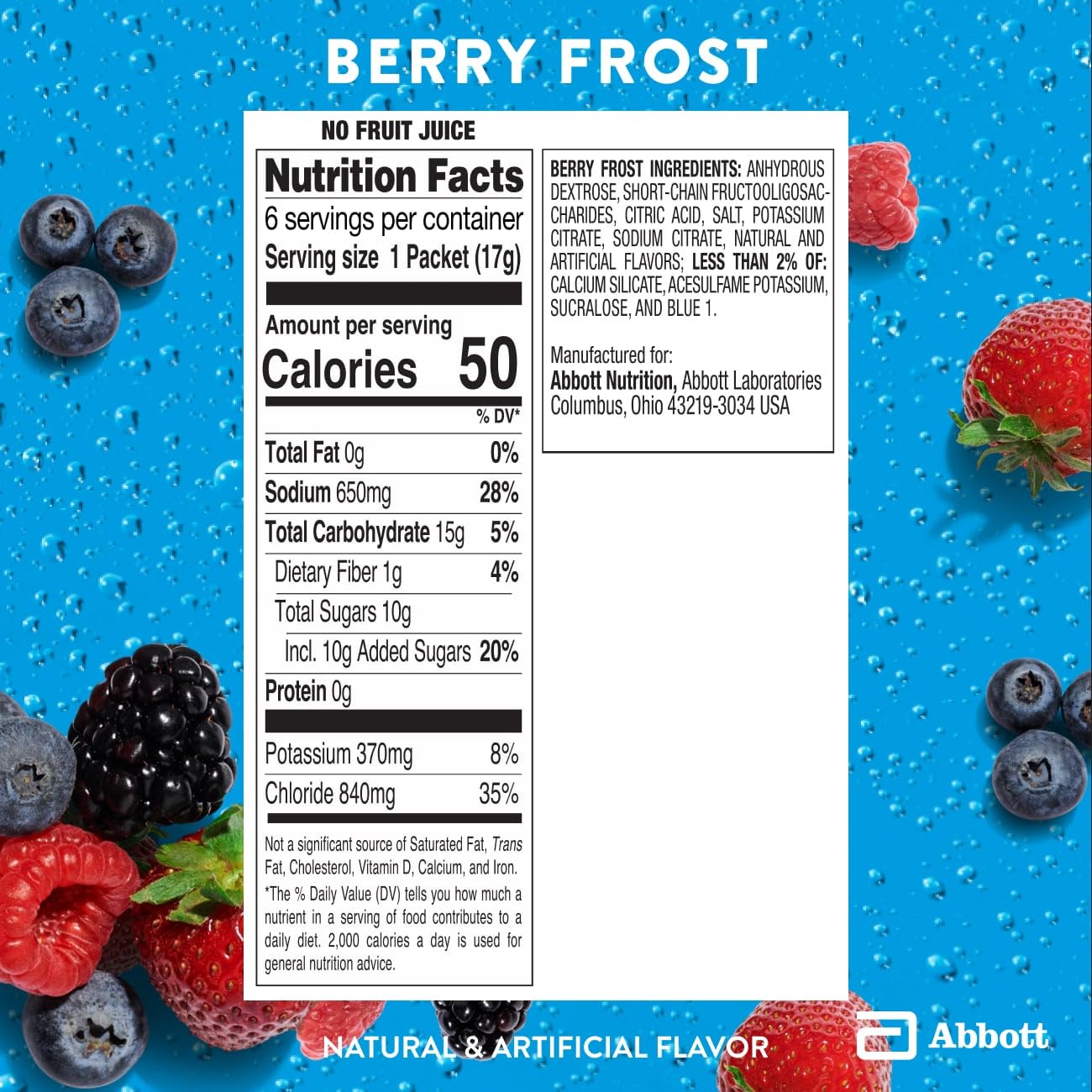
Pedialyte
$35.61
In stock on Amazon
Check price on AmazonHow to Choose: The Decision Rule
Here’s the honest “if X, then Y” breakdown based on the formula evidence:
If the primary symptom is vomiting, diarrhea, or both (classic stomach bug): → Use Pedialyte Classic or DripDrop ORS. Both sit within clinical ORS osmolarity targets. If the person won’t drink Pedialyte, switch to DripDrop for compliance. Do not substitute Liquid I.V. as the primary rehydration tool in this scenario.
If the patient is a child under 12: → Pedialyte first, full stop. The AAP’s clinical guidance on acute gastroenteritis is explicit on this point. The sodium level is appropriate for pediatric weight-based dosing, and the product’s clinical track record spans decades. DripDrop ORS is a credible second option; Liquid I.V. is not designed or recommended for this population in illness settings.
If the issue is fever-based dehydration in a healthy adult with no GI symptoms: → Any of the three will work. Liquid I.V. becomes competitive here because osmolarity concerns diminish when vomiting and diarrhea are absent. Use what’s available.
If you’re a practitioner — RD, athletic trainer, coach — recommending sick-day products to clients: → Stock both Pedialyte powder packs (budget option, clinical baseline) and DripDrop ORS (taste-compliance bridge) as your standard sick-day recommendation. Per the ACSM’s fluid replacement position stand, Liquid I.V. stays in the conversation for performance and travel contexts, not acute GI illness.
If cost is the primary constraint: → Pedialyte powder packs at bulk retail pricing (~$0.75–$1.00 per serving) are the value choice without formula sacrifice. Liquid I.V. Costco multipacks offer a lower per-serving cost than DripDrop if you are not dealing with active GI illness.
The bottom line: ORS science is settled, and it is specific. Pedialyte and DripDrop were built to meet it. Liquid I.V. was built adjacent to it, for a slightly different use case. That distinction matters most when things are at their worst — which is exactly when you don’t want to be reading labels at 2 a.m. Know your product before you need it.