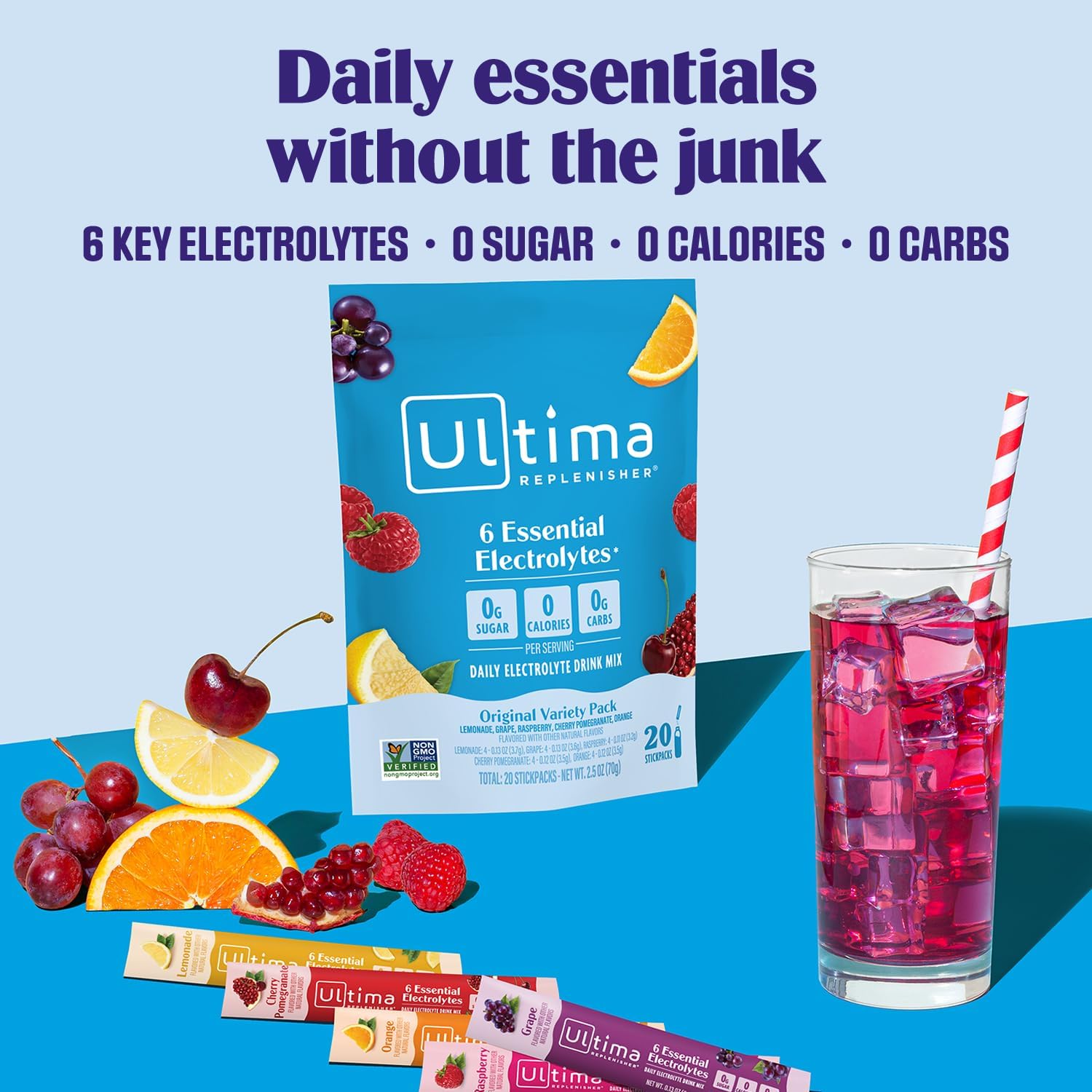
If you’ve ever looked at a $45 tub of LMNT and thought I want cleaner hydration, just… not at that price — this guide is for you. Electrolytes are minerals (primarily sodium, potassium, magnesium, and chloride) that dissolve in your blood and regulate everything from muscle contractions to how well your cells hold on to water. When you sweat, you lose them, and plain water alone doesn’t put them back. That’s the entire case for electrolyte powders and drops: they replace what sweat takes, faster than food alone can. The premium tier does it beautifully, but it’s not the only tier that does it well. The value segment — products priced roughly $0.30–$0.65 per serving — has quietly matured, and two names come up constantly: Ultima Replenisher and Dr. Price’s Vitamins Electrolyte Powder. We dug into the published specs, aggregated owner reviews, and nutritional literature so you can make a confident call before your next purchase.
What “Value Tier” Actually Means — and Why It’s a Real Category Now
In the water-enhancer market as of mid-2026, the electrolyte space sorts into three rough cost buckets:
- Budget (under $0.40/serving): Single-mineral or very low-dose blends; often more flavor product than function product.
- Value ($0.40–$0.70/serving): Multi-mineral formulas with meaningful electrolyte doses; the segment where Ultima and Dr. Price’s compete.
- Premium ($0.90–$1.80/serving): High-sodium precision blends like LMNT, Cure Hydration, and Hydrant; often clean-label, sometimes clinically dosed.
The value tier used to mean compromise: weak potassium numbers, no magnesium, a lot of sweetener to mask the mineral taste. That reputation is becoming outdated. Ultima has been reformulated twice since 2020, and Dr. Price’s entered wide retail distribution in 2024 with a formula that reviewers on multiple platforms describe as “cleaner than expected for the price.” Neither product is perfect, but both are meaningfully better than the budget tier, and the gap below premium is narrower than it used to be.
The tradeoff that hasn’t closed: sodium. This is the number that separates value from premium more than any other, and it’s worth understanding why before you rank these products for your use case.
The Sodium Question
The American College of Sports Medicine’s position stand on exercise and fluid replacement identifies sodium as the primary electrolyte lost in sweat, with typical losses ranging from 460–1,840 mg per liter of sweat depending on individual sweat rate and heat acclimatization. For casual hydration — an hour at the gym, a walk in warm weather, everyday wellness — low-sodium formulas are fine. For endurance training over 60 minutes, hot-weather output, or anyone who salts their food heavily and then sweats it all back out, low-sodium products become limiting.
Both Ultima and Dr. Price’s carry modest sodium loads by design. That’s a deliberate positioning choice (it keeps the flavor profile clean and the formula’s “wellness” framing intact), and it’s an honest tradeoff — not a defect — as long as you know it going in.
By the Numbers: Value-Tier Head-to-Head
| Product | Sodium (per serving) | Potassium | Magnesium | Cost/serving (approx., May 2026) | Sweetener |
|---|---|---|---|---|---|
| Ultima Replenisher | 55 mg | 250 mg | 100 mg | ~$0.55–$0.65 | Stevia |
| Dr. Price’s Electrolyte Powder | 120 mg | 200 mg | 55 mg | ~$0.38–$0.45 | Stevia + erythritol |
| Liquid I.V. (mid-tier benchmark) | 500 mg | 370 mg | — | ~$1.30 | Cane sugar |
| LMNT (premium benchmark) | 1,000 mg | 200 mg | 60 mg | ~$1.50 | Stevia |
Sources: Published label specs via manufacturer sites; pricing reflects approximate Amazon marketplace pricing as of May 2026 for mid-size SKUs.
The table tells you almost everything you need for the decision frame. Ultima leads on magnesium, Dr. Price’s leads on sodium (still modest in absolute terms), and both products are dramatically below mid- and premium-tier sodium levels. Neither is designed for high-sweat sport replacement. Both are designed for daily, low-to-moderate intensity hydration support.
Ultima Replenisher: The Magnesium-Forward Case
Ultima’s formula has been a fixture in wellness circles long enough that it occasionally gets dismissed as “old news.” That dismissal underestimates the magnesium number. At 100 mg per serving, Ultima delivers roughly 25% of the ACSM’s general adult daily reference for magnesium — meaningful for a hydration product, since most electrolyte blends in this price tier include token amounts (15–30 mg) primarily for label aesthetics.
Examine.com’s reference page on electrolytes notes that magnesium plays a role in over 300 enzymatic reactions, including muscle relaxation and energy metabolism, and that dietary insufficiency is common in active adults. For a runner whose legs cramp consistently in the back half of long workouts — and who has already optimized sodium and potassium intake through food — Ultima’s magnesium load is genuinely useful, not decorative.
The formula is also certified vegan and non-GMO, uses stevia exclusively for sweetness, and carries no artificial colors, which matters for the portion of our audience tracking the post-California-prop shift away from synthetic dyes in consumer products. Healthline’s overview of electrolyte products consistently groups Ultima with “cleaner label” options in the accessible price range.
Where Ultima struggles: The 55 mg sodium ceiling means that if you’re sweating hard for longer than 45–60 minutes, you are not replacing sweat losses from this product alone. It’s a daily wellness electrolyte, not a sport replacement formula. Outside Online’s roundup of electrolyte drinks has flagged this distinction explicitly — Ultima earns consistent mentions for low-intensity use and general health goals, but drops out of contention when performance reviewers stack it against sodium-forward formulas.
Owners consistently report that the flavor quality is a genuine differentiator — the Raspberry and Grape varieties especially get noted as tasting “less chemical” than most powder electrolytes at this price. For a product you’re drinking every single day, flavor fatigue matters more than most product reviews weight it.
Best for: Daily hydration support, magnesium supplementation through drink format, clean-label priority buyers, anyone doing light-to-moderate activity who doesn’t need sodium replacement.
Dr. Price’s Vitamins Electrolyte Powder: The Budget-Accessible Entry Point
Dr. Price’s has a different value proposition: it’s the product you recommend to someone who’s never bought an electrolyte powder before and needs to spend as little as possible to find out whether they even like this category. The per-serving cost of $0.38–$0.45 puts it within range of flavored drink mixes that offer zero electrolyte function — so the functional case for upgrading from zero-electrolyte flavoring is easy to make.
The formula is more sodium-forward than Ultima (120 mg vs. 55 mg), which makes it a slightly better fit for light workout use, though both are still well below what the Academy of Nutrition and Dietetics’ sports nutrition resources describe as adequate sweat-replacement sodium for sustained aerobic exercise. Dr. Price’s uses a stevia-and-erythritol blend for sweetness; some reviewers find erythritol adds a mild cooling sensation that polarizes opinions, so this is worth flagging before recommending to clients who are sensitive to sugar alcohols.
The product’s vitamin B complex inclusion (B6, B12) is a point of differentiation from Ultima. Whether that matters depends on your use case: if you’re already taking a B-complex supplement, it’s irrelevant; if you’re not, it’s a modest added-value feature that helps justify the product relative to its price. Examine.com’s coverage of B vitamins notes that deficiency in B12 is particularly common in plant-based eaters, so for vegan athletes who aren’t supplementing separately, the inclusion is a net positive.
Where Dr. Price’s struggles: Magnesium at 55 mg is low enough that it provides minimal therapeutic benefit for users who are specifically trying to address muscle cramping or sleep quality through magnesium intake. The formula is also less fully transparent on label sourcing than Ultima — reviewers who prioritize Informed Sport or NSF certification will find that neither product carries third-party sport certification, which is a genuine gap if you’re advising competitive athletes who need to clear supplements for drug testing purposes.
Best for: First-time electrolyte buyers, anyone price-sensitive who wants functional electrolytes without committing to premium pricing, light-activity use, clients building a daily hydration habit from scratch.
The Decision Framework: If X, Then Y
For a practitioner advising clients or making purchasing decisions across a range of use cases, here’s how we’d map these products to scenarios:
If your client is a recreational exerciser doing 3–4 moderate sessions per week and their primary goal is daily hydration consistency: → Ultima Replenisher is the stronger pick. The magnesium profile is the differentiating factor; it does real work beyond just electrolyte repletion, and the flavor quality reduces the friction that kills daily habits.
If your client is new to electrolytes, skeptical of the category, and needs to spend under $0.45/serving to even try: → Dr. Price’s is the right starting point. It offers enough functional electrolyte content to be meaningfully better than flavored water, the price creates almost zero commitment, and it’s a low-risk way to build the hydration habit before graduating to a better-specified product.
If your client is a competitive endurance athlete with sweat sessions over 60 minutes in warm conditions: → Neither product is the right primary recommendation. Both sodium levels are too modest for sustained sweat replacement. The correct answer here is moving up-tier to LMNT, Liquid I.V. Hydration Multiplier, or Hydrant — and the value-tier conversation becomes about a secondary “daily wellness” electrolyte rather than a training product.
If your client is a parent looking for a low-sugar, additive-free option for an active kid: → Ultima edges ahead again: stevia-only sweetener, no artificial colors, no erythritol (which can cause GI distress at higher doses in smaller bodies per Healthline’s digestive tolerance notes), and a flavor lineup that younger drinkers tend to find approachable.
If budget is fixed and the choice is between value-tier electrolytes and continuing to drink plain water: → Either product is a meaningful upgrade. The value tier earns its existence here. You don’t need to spend $1.50 a packet to get real electrolyte benefit — the science doesn’t require premium positioning.
What We’d Watch For in the Next 6 Months
The value tier is where reformulation happens quietly. Ultima’s 2024 formula change adjusted stevia sourcing without wide announcement — the kind of move that affects taste consistency across batches and tends to show up in aggregated review patterns before official brand communication catches up. We’ll flag any label changes in our quarterly roundup.
Dr. Price’s wider retail footprint as of 2025–2026 means more price competition and potentially more shelf-presence SKUs (single-serve trial packets have appeared in some markets), which is worth watching for clients who want to trial before buying in bulk.
For now: both products deliver real electrolyte value below $0.65 a serving, and the decision between them is less about which one is “better” than about which formula’s tradeoffs match the specific use case in front of you. That’s the practitioner’s actual job — and the math here is clear enough to do it confidently.